Showing posts with label white. Show all posts

Sunday, April 7, 2013

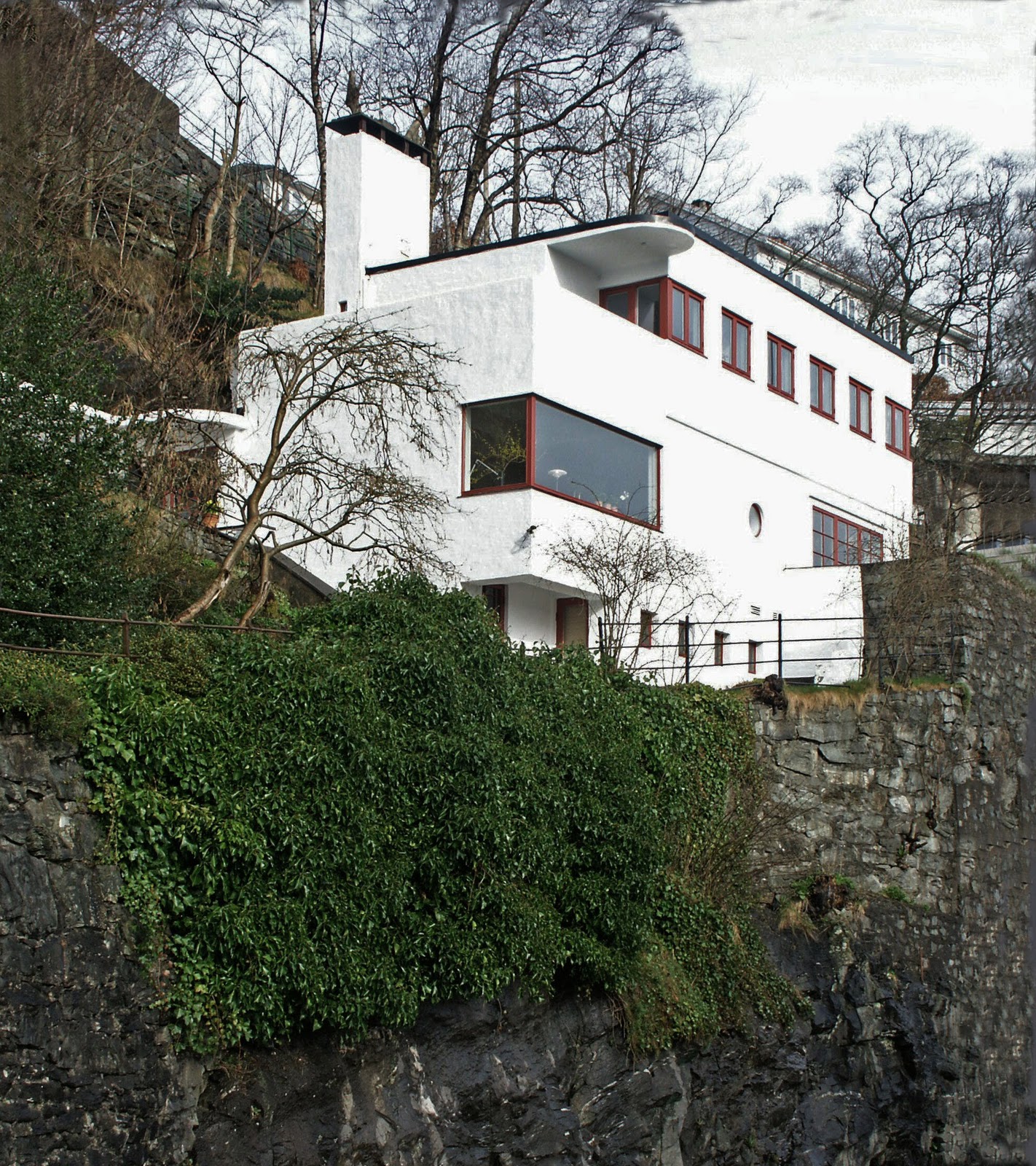
Serveringsgång


Albin Stark
Stockholm, 1938-9

Tuesday, October 9, 2012

Hamburg Apartment

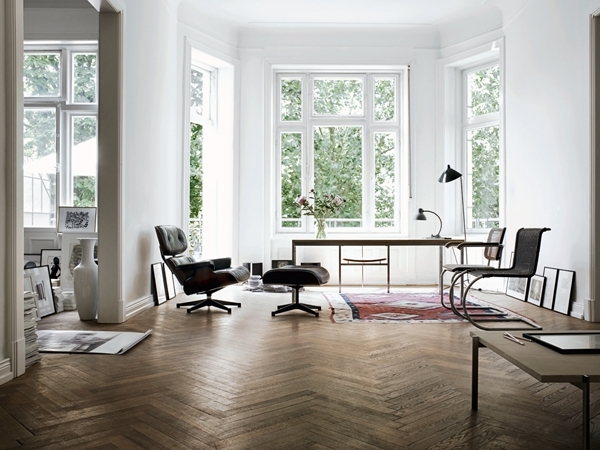
There's nothing baroque about the neo-baroque apartment of ad-man Wolfgang Behnken of Young & Rubicam, shown below. It is rather an almost miesian gallery of good design, with pieces by the Eames, Florence Knoll, Milo Baughman and Mies as well as a fantastic coffee table by George Nakashima. There are also many outstanding lamps: especially those by Serge Mouille and Christian Dell.

The apartment is mostly painted white, with few carpets and textiles, which really puts focus on the design pieces.  I suppose it does, however, require a certain type of person to live in this sort of almost barren atmosphere, but that does not change the fact that it looks stunning. Mr. Behnken also seems to have two livingrooms - perhaps one being the gentleman's room?

The kitchen and bathrooms are also very plain with their white mosaic tiles, and chairs by brit minimalist Jasper Morrison. Notice the construction-site-type lamps above the mirrors, which are actually of a quite beautiful design.


from ELLE DECOR italia


Wednesday, October 12, 2011

From Hans Asplund's Nordiska Kompaniet


Photo by Stellan Herner for ELLE Interiör

When you look at these pictures you really see that this place has the potential to become once again the gem that it once was.

More about the department store where this was shot here.

Wednesday, August 31, 2011

PROBABLY THE BEST SAKE IN THE WORLD


Well, certainly the most beautiful bottle design ever made - Kozaemon, 3 years.

Thursday, March 17, 2011

Give me big windows and a view, and some mid--century furniture...


...And I'm happy.

pictures by Richard Foulser


Wednesday, February 23, 2011

Sylt House


Ad-Man Wolfgang Behnken of Young & Rubicam, whose Hamburg apartment I posted here, also owns a retreat on the island Sylt (the German equivalent of St. Tropez, Malibu, Båstad ,or what have you) - equally sparsely decorated with 20th century design icons - such as the Florence Knoll sofas, Serge Mouille lamps, and Hans J. Wegner Cowhorn-chairs along Kjaerholm tables. A rare vintage Jean Prouvé  Standard-chair  and desk is seen on the upper floor of this traditional Friezenhaus, and stacks of books and magazines are  scattered around the floor, whilst photography by superstars such as Annie Leibovitz, Richard Avedon and Helmut Newton are to be found here and there on the floor. I'll never understand it. Looks striking though, even though the palette is quite earthy.


Sunday, December 5, 2010

Oops...

image
image
image
image


Apple may be the company today we think of first which actually takes product design seriously. Too bad those products don't always run nearly as smooth as they look.

Pictures by Paul Fairchild, via my new favourite blog COLT+RANE


Thursday, December 2, 2010

Father and Son Grung


When it comes to design and architecture, Norway's contribution tends to be downplayed - something which I can find no good reason for. This is a shame, but below you will find examples of great norwegian architecture by father and son Grung.

LEIF GRUNG

Leif Kuhnle Grung, born 1894, was the pioneer of functionalism in his native Bergen, Norway. Having studied in Stockholm he was heavily inspired by Erik Gunnar Asplund, but also by Frank Lloyd Wright and the Bauhaus. Being the champion of modern architecture in Bergen he became both heavily criticised and highly respected. Kalmarhuset, perhaps his most striking, almost expressionistic, work in Bergen - built from white concrete and dark-red brick, received the following statement from Bergen's most important pre-modernist architect Fredrik Konow Lund: the so-called Kalmarhuset is a school-example of what not to build in a culture-village like Bergen".
In 1945, shortly after the war, Leif Grung was accused of conspiring with the Germans, and was thus expelled from the Bergen Architectural Association. Leif Kuhnle, who was described as having  "a remarkable personality with a distinctive artistic nerve" was devastated, and commited suicide.

A few days later, the first prisoners of war returned from Germany, who testified that not only was he falsely accused, but that he had been an intermediary for the escape routes to England, as well as a saboteur of German building plans.

In 1949 he was awarded the Houens Foundations Prize for Good Architecture posthumously for his Blaauwgården building.

Villa Lau-Eide, 1935


(photo by Klaas Vermaas)
 Kalmarhuset, 1936.

(Photo by Thorir Vidar/panografi.com )

Blaauwgården, 1936. The building is aesthetically divided into two wings to represent its functions: offices on the left - storage to the right. The building also incorporates elements of traditional dock architecture in Bergen.


(Photo by Thorir Vidar/panografi.com )


Sources and further information:


To be continued.

Friday, November 5, 2010


Tuesday, September 14, 2010

Casa del Torkel

Pictures from the Swedish tv-show Antikdeckarna, with actor Torkel Petersson showing off his apartment, furniture, ceramics and his shag (rya) carpet.