Designed in 1970. Executed by cabinetmaker Johannes Hansen.
Showing posts with label 70's. Show all posts
Wednesday, November 13, 2013
Monday, March 25, 2013
Porsgrunn
A marble from the same-titled municipality in south-eastern Norway; shifting in colour from gray to green and blue; and rich in fossils.
Above Poul Kjærholms PK-61 with this wonderful stone as a top; a limited number of pieces were produced for E. Kold Christensen in the early seventies. Today they are among the most sought-after in his production.
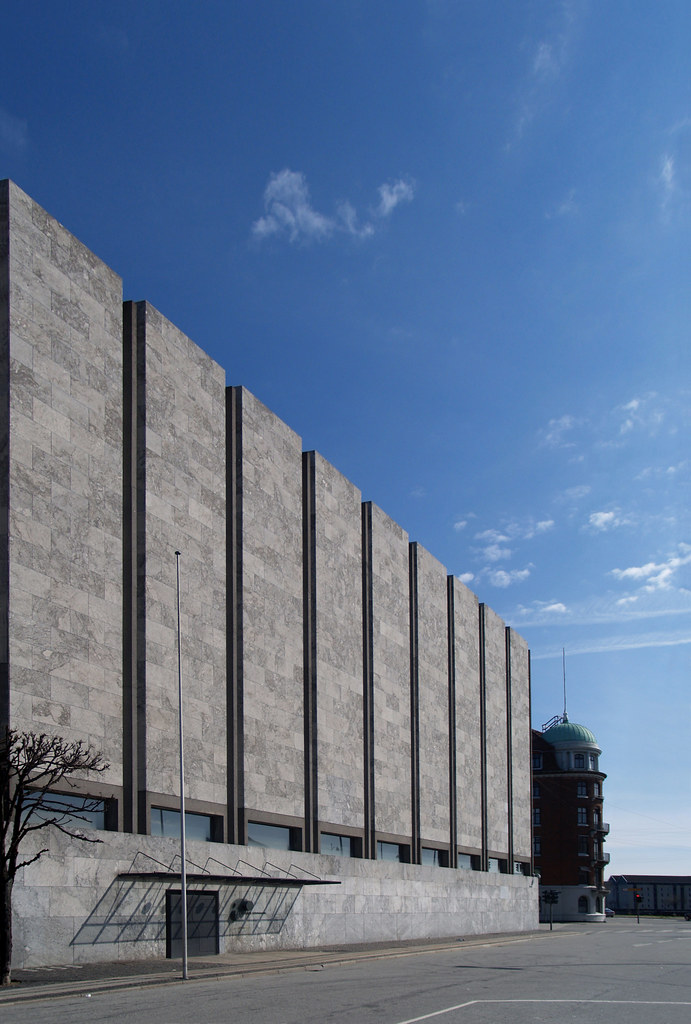
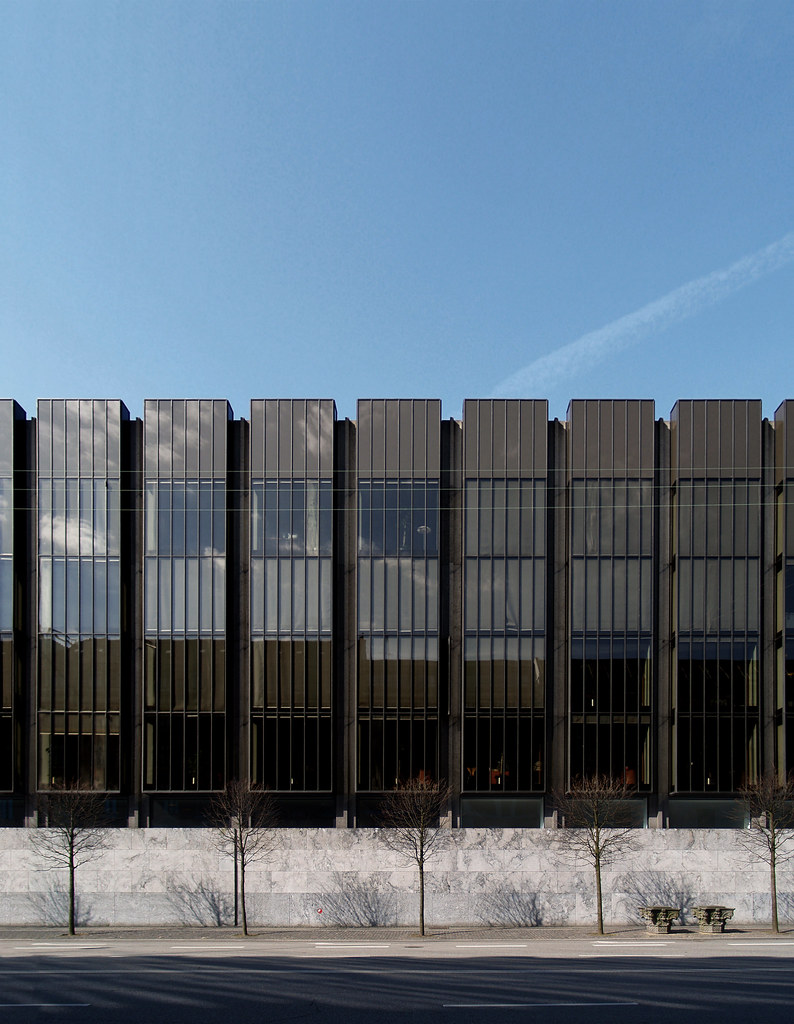
Porsgrunn was also the stone used by Arne Jacobsen for his National Bank in Copenhagen, built 1961-78, and according to some sources, supposedly sucked the quarry dry in the process.
Tuesday, February 28, 2012
The Lesser-Known Ox-Chair
Designed by Arne Jacobsen for the National Bank of Denmark in 1966.
Arne Jacobsen designed this chair over a five-year period. Large, impressive, and extremely comfortable, when it was presented in 1966 it was met with surprise and admiration. “This is also how he can be: angular and with a touch of martial temperament that we could call Germanic or perhaps more properly Japanese in expression”
- Thau and Vindum, eds., Jacobsen.
pictures by seier + seier
read more about the National Bank building here
Labels:
60's,
70's,
architecture,
copenhagen,
denmark,
furniture,
marble,
photography
The Rainbow House
Comparing architecture to music is quite a clichée, but with this house, considering it was built for jazz musician Russ Garcia, such an allegory isn't too far off.
This above video, featuring Devendra Banhart and his girlfriend, beautifully directed by Lisa Eisner, was made for spectacle-firm Oliver Peoples (you know, American Psycho?). It is set in the Garcia residence, also known as the Rainbow House (which was pulled down by an aussie hillbilly with a mullet and a truck in Lethal Weapon 2) on Mulholland Drive, designed in 1964 by none other the man himself - the master of googie architecture - John Lautner. It is a truly amazing house, and it only gets bettter once you see it's insides and the stunning spaces it posesses.
The house had seen it's best days, and at the turn of the millenia, countless "improvements" had wrecked the soul of the house, but its current owners has however had it renovated by architects Marmol & Radziner, who also worked on the restoration of Richard Neutra's Kaufmann house, and the decorator, Darren Brown, put that old-school playboy-feel to the interiors.
The binuclear floorplan of the building is as genius as it is original, and I cannot help to wonder why it hasn't been more widely copied. On the one side of the house exists the private sphere: bedrooms, bathrooms, an office and a movie room - spaces that do not demand the grand volume of the great room, situated in the other wing, along with an elevated dining area and a open kitchen. When it in 2002 came on the market, it did so at the bargain price of $1,395,000.
Labels:
60's,
70's,
architecture,
california,
lautner,
music,
photography,
usa,
video
Friday, February 3, 2012
flickr: I got it
Labels:
60's,
70's,
architecture,
bronze,
copper,
jaenecke samuelsson,
östermalm,
photography,
sandstone,
stockholm,
sweden,
tengbom
Wednesday, January 4, 2012
Lidingö, circa 1970.
Green is the ultimate colour of a bahroom. What could be more cozy than standing under a hot shower imagining yourself in a rainforest? This also relates to Le Corbusiers ideas on colour - he basically thought that the shade of a floor/wall/ceiling should correspond to nature's palette. In this age where every bathroom is supposed to be some spa-hamam-refuge, green tiles ought to be more popular than they are.
Sadly, few people dwelve on these matters for mucher longer than it takes to look through the latest IKEA catalogue. And the two bathrooms above, with their fantastic rustic, domestically hand-made ceramic tiles so typical of he late sixties - early seventies, have a very uncertain future, now that the house has been sold. Statistically, they will not make it. And it is a great fatal irony that the possibility of the new owners having chosen exactly this house because of its spatial character, surely furnishing it with mid-century teak cabinets and Eames DSR's (Dowel legs); yet remain completely oblivious to the aesthtic kindred spirit that such bathrooms (and kitchens, mind you) are in relation to the afore-mentioned furniture that they just had to have.
But mark my words:
One day, they'll regret it.
Fiscally or otherwise.
Sunday, November 13, 2011
Thursday, July 28, 2011
Let's Drive Through Copenhagen!
...and take pictures!
Henning Larsen's Ferring centre, 1998-2002, with aditions being built now.
Yes, that's a beer can he's holding.
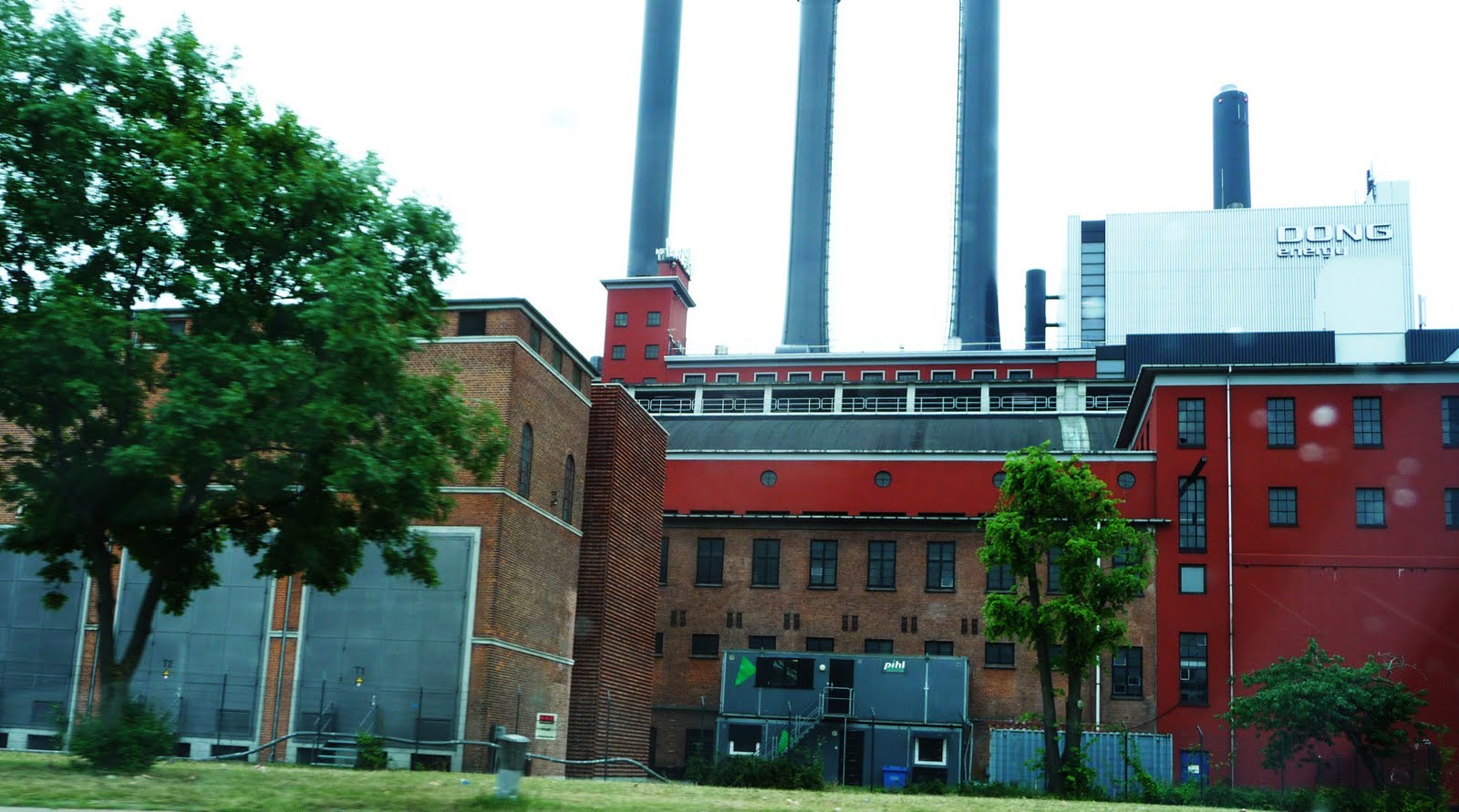
Facory complexes are beautiful, aren't they?
This hotel caught my eye because of the quite beautiful brickwork on it's side. Interesting 'take' on curtain wall construction for the 21st century.
"Den Sorte Diamant" - "the Black Diamond", Schmidt Hammer Lassen, 1999
Next to it was this really interesting building:
That's a greenish marble, anddetails of copper. Awesome.
Good architecture.
Danmarks Nationalbank and the architectural pride of Copenhagen. Arne Jacobsen, 1961-78
Nice bridge and...
...the Foreign Ministry, by Halldor Gunnløgsson, 1977-80
Functionalised building.
Great funkis.
More great funkis at Englandsvej/Peder Lykkes Vej, Amager.
And great attic-apartments!
Henning Larsen's Ferring centre, 1998-2002, with aditions being built now.
Yes, that's a beer can he's holding.
Facory complexes are beautiful, aren't they?
This hotel caught my eye because of the quite beautiful brickwork on it's side. Interesting 'take' on curtain wall construction for the 21st century.
"Den Sorte Diamant" - "the Black Diamond", Schmidt Hammer Lassen, 1999
Next to it was this really interesting building:
That's a greenish marble, anddetails of copper. Awesome.
Good architecture.
Danmarks Nationalbank and the architectural pride of Copenhagen. Arne Jacobsen, 1961-78
Nice bridge and...
...the Foreign Ministry, by Halldor Gunnløgsson, 1977-80
Functionalised building.
Great funkis.
More great funkis at Englandsvej/Peder Lykkes Vej, Amager.
And great attic-apartments!

Labels:
00's,
10's,
30's,
40's,
50's,
60's,
70's,
80's,
90's,
architecture,
brick,
copenhagen,
copper,
denmark,
funkis,
gunnlogsson,
henning larsen,
marble,
photography
Monday, July 25, 2011
Those great-looking benches at the Roskilde Crematory reminded me of a couple of pieces of Danish design finished in blonde wood and tan leather:
A rare Ilse Rix dining set, oak, 60's.
Poul Kjaerholm's très japonais PK 27 lounge chairs and PK66 coffee table, PP Møbler, from 1971.
A rare Ilse Rix dining set, oak, 60's.
Poul Kjaerholm's très japonais PK 27 lounge chairs and PK66 coffee table, PP Møbler, from 1971.
Kaare Klint's iconic Safari-chairs, here in ash,with a matching slate-top taple; designed 1933; produced by Rud Rasmussen.
An ash Wegner CH?? with the characteristic swivel-back, produced by Carl Hansen & Søn; I'm guessing 50's...
Lastly, these rarer leather-covered versions of Arne Jacobsen's Milano Triennale Grand Prix-winning chairs model 3130. Laminated beech legs; designed in '57; produced by Fritz Hansen.
All these pieces are available from Jackson's.
Sunday, March 6, 2011
Carl-Harry Stålhane (1920-1990) is my favourite ceramicist. He is mostly known for his sophisticated and delicate vessels in various shapes and forms, as well as the many sets of tableware he created for Rörstrand. But he was also a master of the now forgotten and unappreciated reliefed ceramic wall.
For Sparbanken
"Dynamik" for the SAAB headquarters.
Friday, March 4, 2011
Beauty Salon Furniture
Chair for Nordiska Kompaniets Skönhetssalong (the department store NK's beauty salon), designed by Hans Asplund in 1955. About six were made.
That rug ain't so bad neither.
The interior was most likely designed by him as well, it carries his trademark decorative, organic and costly shapes and materials, obviously inspired by his father - Erik Gunnar Asplund. According to Wikipedia he was employed here between '51-53, though the addition he created to the department store was built between 1961 and '64.
That rug ain't so bad neither.
The interior was most likely designed by him as well, it carries his trademark decorative, organic and costly shapes and materials, obviously inspired by his father - Erik Gunnar Asplund. According to Wikipedia he was employed here between '51-53, though the addition he created to the department store was built between 1961 and '64.
The boxy shape to the left is another addition, an entrance by Bengt Lindroos, built in 1973. This picture don't give these buildings any justice, they're both quite tasteful and sophisticated austere sructures. Maybe, if I'm lucky, Rävjägarn will capture it soon. But the cars are nice tough.
Subscribe to:
Posts (Atom)